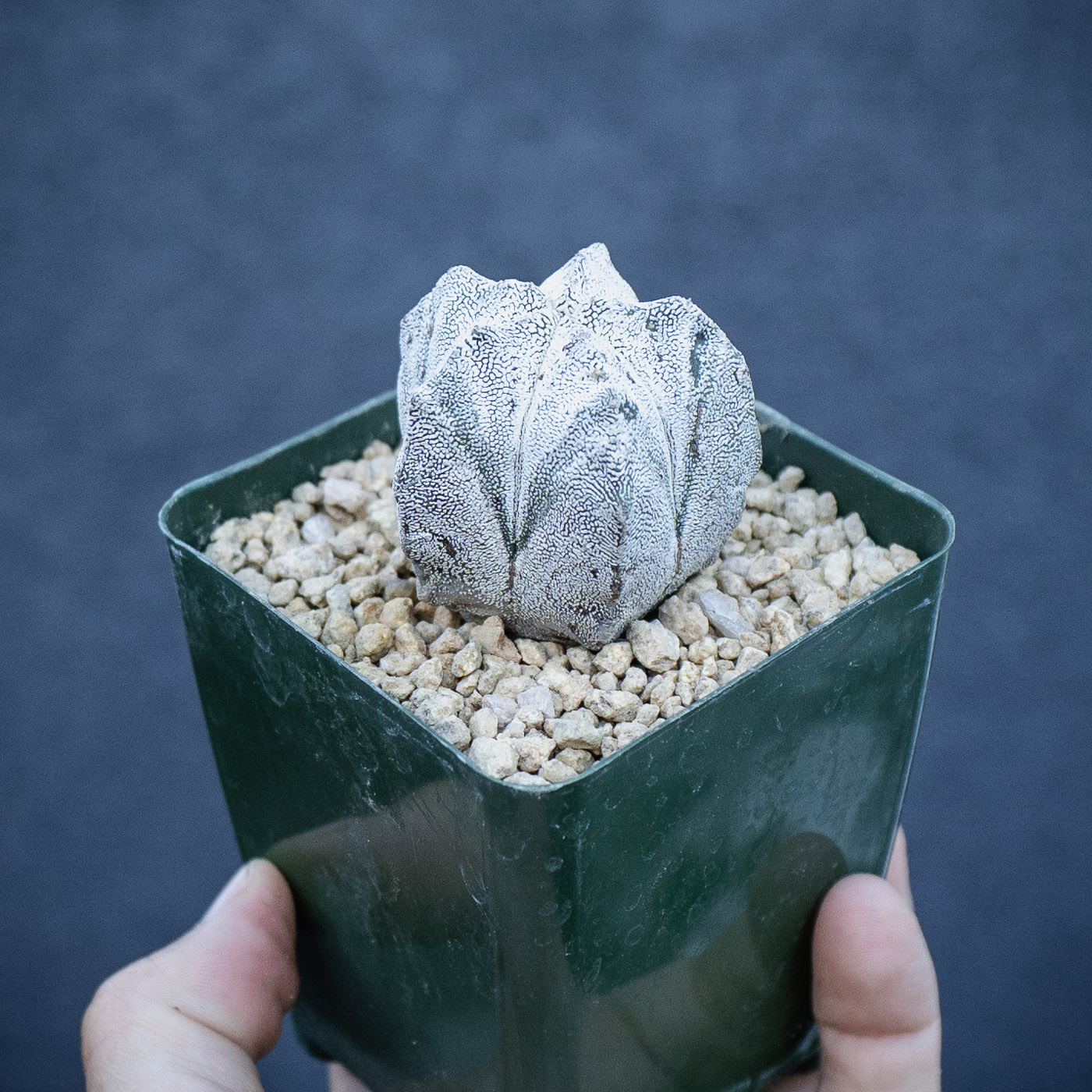
Astrophytum myriostigma
Acquired3 months ago8/16/2026
Notes
Hailing from a summer-rainfall desert system with high solar intensity, this species thrives in warm temperatures, high light, and lean, mineral-rich conditions. In a coastal Zone 10b environment, maximum UV exposure is essential to maintain a dense coating of white trichomes and a compact, symmetrical form; excess shade or organic soils cause the stem to stretch, turn deep green, and lose its iconic speckled pelt. It demands a fast-draining, calcareous mineral substrate, making your 80% volcanic pumice blend cut with coarse decomposed granite and calcined clay ideal to replicate its native rocky limestone pedregal. Cultivating this specimen in a heavy, highly breathable raw cement pot ensures fast moisture evaporation away from the vulnerable taproot and lower stem tissue. Water deeply during warm spring and summer growth cycles, allowing the substrate to dry out completely between soakings, and enforce a strict, bone-dry winter rest beneath a solid polycarbonate roof to protect against cold moisture and basal rot.
Origin
Mexico. Endemic to the high-altitude arid plateaus, rocky limestone hills, and dry scrublands of northeastern and central Mexico (spanning the states of Coahuila, Nuevo León, San Luis Potosí, and Tamaulipas). In its native Chihuahuan Desert habitat, it grows nestled into gravelly limestone slopes and under light nurse shrubs, fully exposed to intense UV radiation and extreme diurnal temperature swings. It forms a solitary, spherical-to-columnar stem featuring 5 prominent, sharply defined vertical ribs (though rib counts vary from 3 to 8 across varieties). The entire epidermis is densely coated in tiny, woolly white trichomes—giving it a chalky, speckled appearance designed to reflect solar radiation and trap trace atmospheric moisture—and is notably spineless. During warm summer stretches, it produces large, glossy, yellow daisy-like flowers through its woolly apex.
Note: Coordinates indicate a general region for educational purposes and are not exact locations. Please do not use them for collection or poaching.