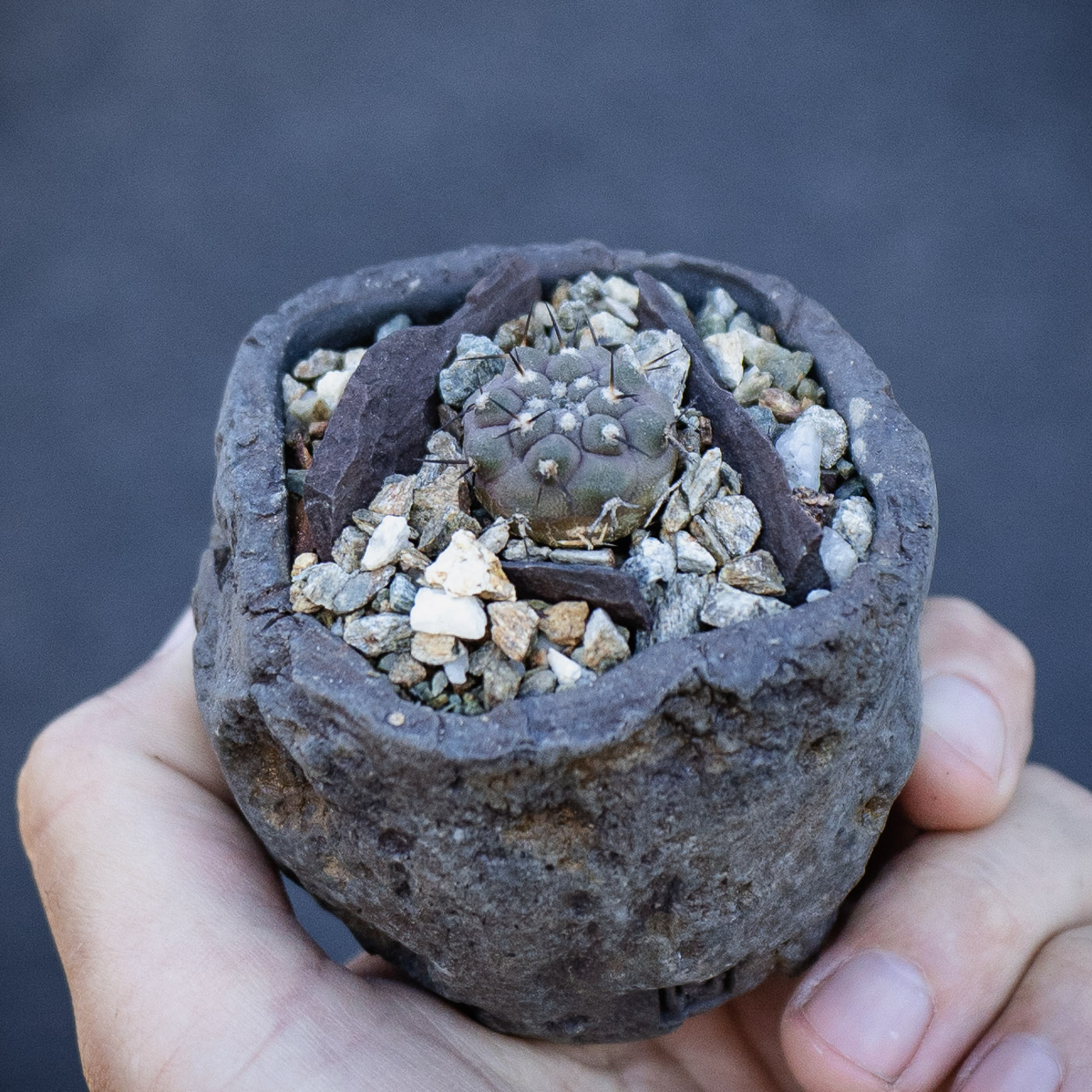
Copiapoa cinerea subs. columna-alba
Notes
Originating from one of the starkest, driest coastal habitats on Earth, this population survives almost entirely on atmospheric moisture delivered by the heavy camanchaca fog bank. In your coastal Zone 10b environment, maintaining its intense porcelain-white wax layer and compact columnar habit requires maximum UV sun exposure, excellent ventilation, and strict moisture discipline; organic media, excessive shade, or ambient humidity will cause the stem to green, lose its waxy bloom, and rot at the base. It demands an uncompromised, hyper-porous mineral substrate, making your 80% premium pumice blend cut with coarse decomposed granite and calcined clay ideal to replicate its native sterile gravel terraces. Cultivating this solitary column in a deep, highly breathable raw cement pot provides necessary root stability while rapidly wicking residual water away from the root collar. Water with extreme restraint only during warm summer stretches—allowing the pot to dry out completely between light soakings—and strictly withhold water during a cold, bone-dry winter dormancy beneath a solid polycarbonate roof to protect against wet seasonal storms.
Origin
Chile. This highly prized geographic accession originates from the hyper-arid coastal plains and flat gravel terraces of Las Tórtolas, situated north of Chañaral in the Atacama Region (near the southern boundary of Pan de Azúcar National Park). In this vast, open marine terrace environment, plants grow fully exposed to extreme solar radiation and persistent coastal winds. The population is famous for strictly solitary, slow-growing columns that exhibit a pronounced north-facing slant toward the equator. It develops an exceptionally dense, porcelain-white to chalky-grey epicuticular wax layer along its body, complemented by short, needle-like, dark brown to jet-black spines arrayed neatly along rigid, well-defined ribs. The apex features a thick cushion of yellow-orange wool from which pale, satiny yellow flowers push during late summer.
Note: Coordinates indicate a general region for educational purposes and are not exact locations. Please do not use them for collection or poaching.