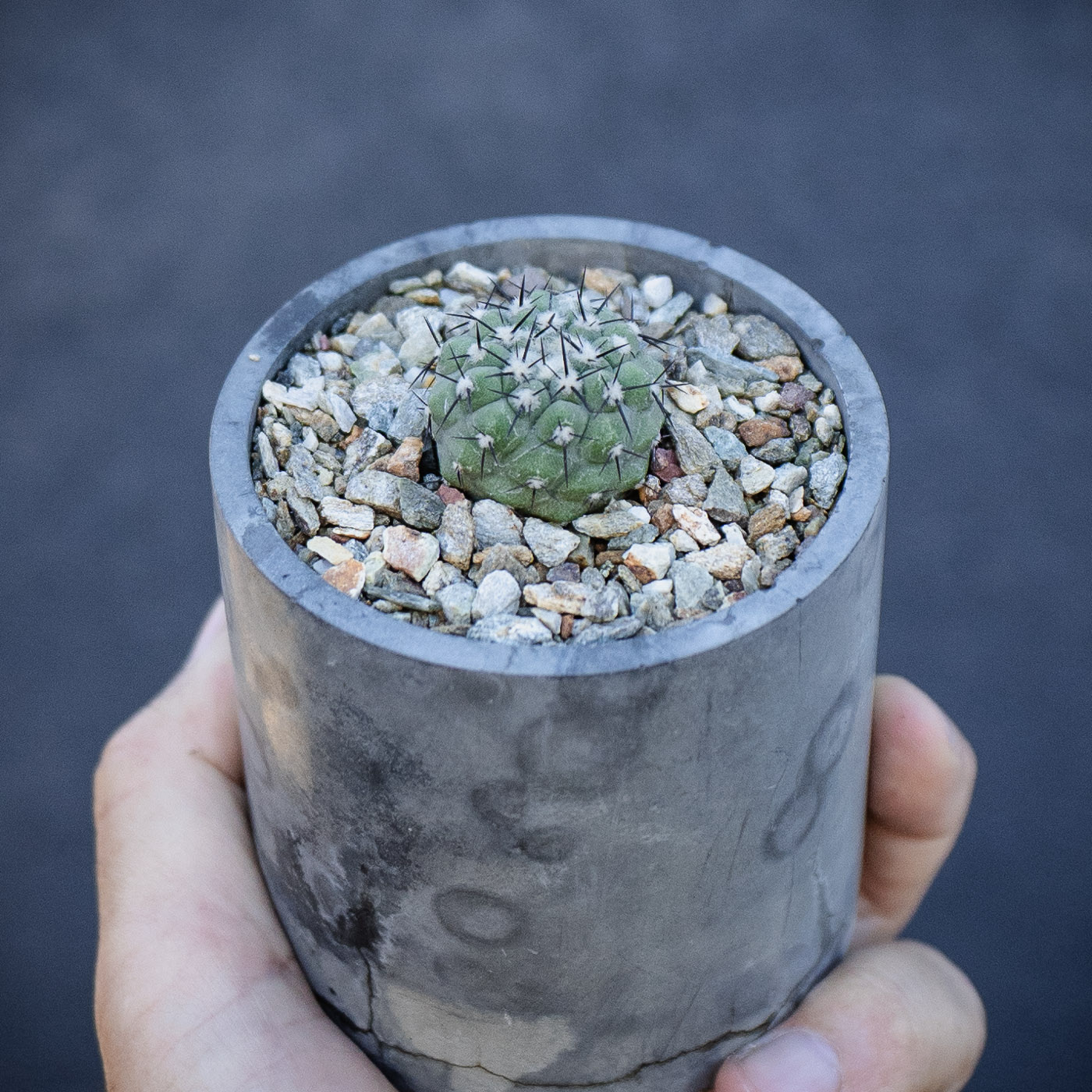
Copiapoa cinerea subs. columna-alba
Notes
Battered by sea winds and receiving practically zero annual rainfall, this maritime population depends almost exclusively on atmospheric condensation from the dense coastal camanchaca fog. In a coastal Zone 10b environment, maintaining its intense porcelain-white wax layer and squat, heavily spined habit requires unfiltered UV light exposure, rapid air movement, and absolute mineral aridity. Overwatering, shade, or humid air will turn the stem dull green, dissolve its protective waxy bloom, and trigger swift basal rot. It demands an exceptionally fast-draining, 100% inorganic substrate, making your 80% volcanic pumice mix cut with coarse decomposed granite and calcined clay ideal. Cultivating this solitary specimen in a deep, porous raw cement container provides essential root stability while ensuring fast evaporation around the taproot collar. Apply water with extreme discipline only during warm summer heatwaves—letting the pot dry out thoroughly between light soakings—and enforce a strict, bone-dry winter rest beneath a solid polycarbonate roof to protect against damp seasonal downpours.
Origin
Chile. This distinct coastal accession hails from the bleak, wind-swept granite headlands and coastal bluffs of Punta Ballena, located along the harsh Atacama coastline between Chañaral and Pan de Azúcar. Situated on a prominent coastal point jutting toward the Pacific, this population endures intense ocean salt spray, continuous high winds, and unrelenting maritime solar radiation. Plants from Punta Ballena are renowned for their low-slung, ultra-compact columnar habit—often leaning heavily toward the equator—and an extraordinarily thick, stark white to chalky-grey epicuticular wax armor. The spination is dense, short, and coal-black to dark mahogany, contrasting sharply against the porcelain body. A dense pad of pale orange-yellow wool protects the apex, where satiny yellow blooms emerge in late summer.
Note: Coordinates indicate a general region for educational purposes and are not exact locations. Please do not use them for collection or poaching.