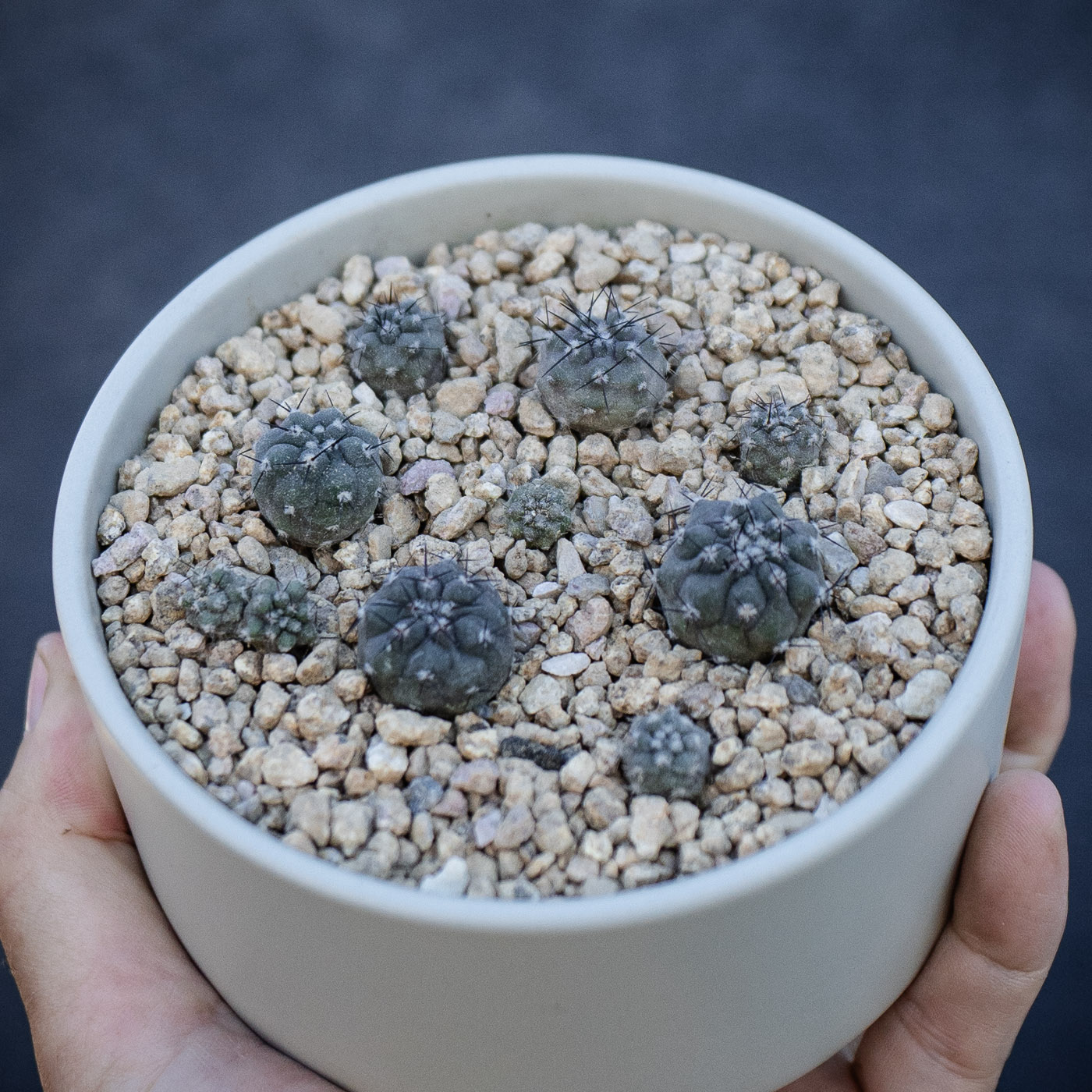
Copiapoa cinerea subs. columna-alba
Acquired23 days ago10/30/2026
Field Data
JN 2511Field NumberJN 2511
Recorded ByJan Novák
LocalityCaleta La Madera, Chile
Field data provided by rarecactus.com
Notes
Because this collection sits further inland and at higher elevation than the coastal headland forms, it is accustomed to baking heat, blazing UV exposure, and stark mineral soils. In a coastal Zone 10b environment, providing maximum, unfiltered sunlight and relentless airflow is critical to maintain its bright chalky-white wax armor and prevent etiolation. It demands an uncompromisingly porous, fast-draining mineral substrate, making your 80% volcanic pumice blend cut with coarse decomposed granite and calcined clay ideal to replicate its native rocky mountain scree. Cultivating this specimen in a deep, highly breathable raw cement pot accommodates its strong taproot and ensures rapid, complete drainage around the root collar. Water deeply but infrequently only during the warmest summer stretches—allowing the substrate to dry out entirely between applications—and strictly withhold water throughout a bone-dry winter rest beneath a solid polycarbonate roof to protect against cold, stagnant rain.
Origin
Chile. This specific field collection by Jan Novák (JN 2511) originates from the rugged, interior-facing elevated gravel ridges and slopes of Alto La Madera, located inland from the coastal fog belts of the Atacama Desert. Unlike the ultra-maritime populations lashed by sea spray right on the coast, columna-alba from interior elevations like Alto La Madera experiences more extreme diurnal temperature swings, intense high-altitude solar radiation, and reduced direct maritime fog influence, relying instead on occasional creeping moisture fronts. It forms robust, solitary columns with a heavy, chalky-grey to porcelain-white epicuticular wax layer and dense, rigid black spines emerging from a prominent, woolly yellow apical crown.
Note: Coordinates indicate a general region for educational purposes and are not exact locations. Please do not use them for collection or poaching.