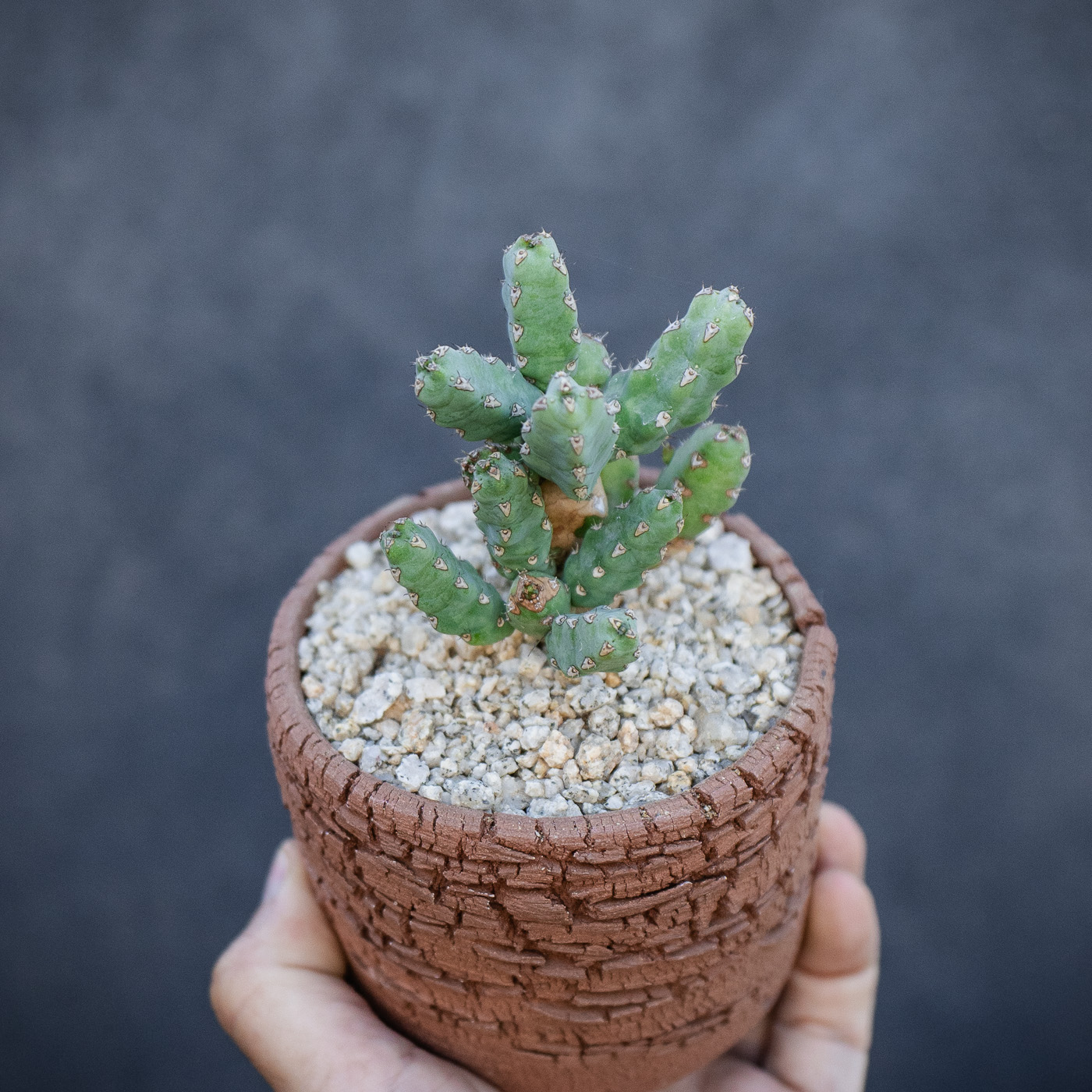
Euphorbia debilispina
Acquired24 days ago10/1/2026
PotterBigfoots Rockeaters
Notes
Unlike summer-active South American cacti, many small South African Euphorbia species from the winter-rainfall regions follow a Mediterranean growth cycle, waking up when autumn temperatures cool and going semi-dormant during the heat of high summer. In a coastal Zone 10b environment, this plant requires bright, filtered light or morning sun to prevent scorching, coupled with maximum airflow. It demands an ultra-porous, highly inorganic mineral substrate, making your 80% premium pumice blend cut with coarse decomposed granite and calcined clay ideal—supplemented by fine quartz gravel top-dressing to mimic its native quartz flats. Cultivating it in a small, shallow, highly breathable raw cement pot ensures rapid moisture evacuation around its delicate root system. Water lightly during mild autumn and spring growing periods, allowing the substrate to dry out entirely between soakings, and reduce watering significantly during the peak heat of summer and the coldest depths of winter beneath a solid polycarbonate roof to protect against unseasonal heavy downpours.
Origin
South Africa. Endemic to restricted, arid gravel plains and quartz-strewn rocky flats in the Northern Cape and Western Cape provinces (often associated with the succulent-rich Knersvlakte region). In habitat, this diminutive, highly specialized dwarf succulent grows half-buried in mineral-rich quartz gravel, protected from intense solar radiation by its pale, reflective stone surroundings or light nurse shrubs. It forms a tight, clustered cushion of tiny, tuberculate, cylindrical stems with a grey-green to brownish epidermis, featuring weak, soft, or rudimentary spine-like structures (giving the species its name). Inconspicuous greenish-yellow cyathia appear at the tips of the stems during the growing season.
Note: Coordinates indicate a general region for educational purposes and are not exact locations. Please do not use them for collection or poaching.