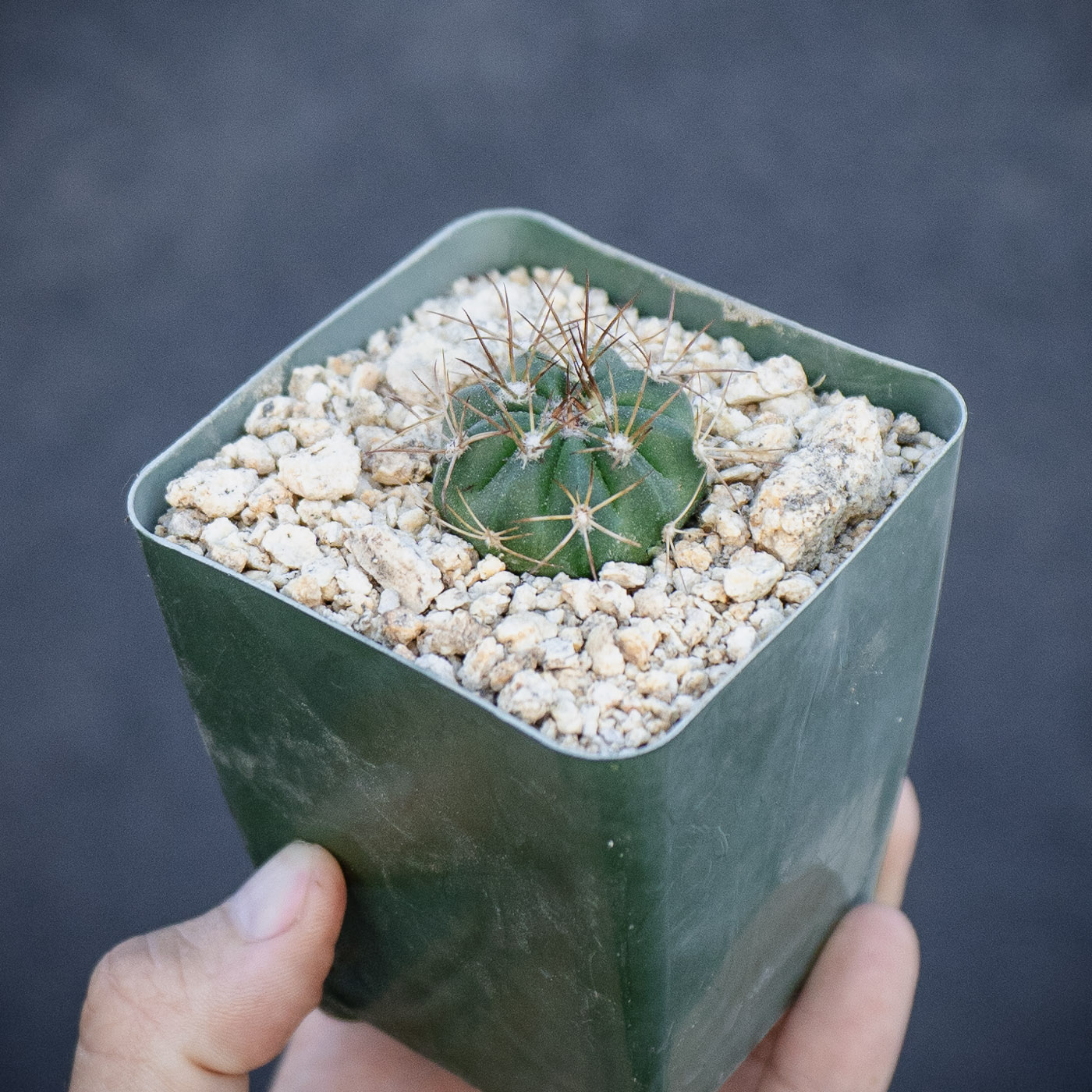
Melocactus curvispinus
Sowingover 1 year ago4/1/2025
Acquired17 days ago10/1/2026
Notes
Unlike high-elevation or cold-desert xerophytes, Melocactus species are strictly low-latitude tropical plants that lack frost tolerance and cannot endure cold, wet substrate. In a coastal Zone 10b environment, maintaining high soil temperatures during active growth is crucial, and roots must never sit in cold moisture during ambient winter drops. It requires an exceptionally open, fast-draining mineral substrate—such as your 80% premium pumice blend cut with coarse calcined clay and decomposed granite—to facilitate rapid evaporation around the root zone. Cultivating this specimen in a breathable, raw cement pot provides vital stability for its heavy, globose body while wicking excess water away from the root collar. Water generously but with complete drying cycles during warm, sunlit summer stretches. During winter, strictly withhold water and shelter the plant under a solid polycarbonate roof, keeping it protected from ambient moisture and cold winter rains.
Origin
Mexico, Central America, northern South America, and the Caribbean. This species boasts one of the widest geographic distributions in the genus Melocactus, ranging from Mexico through Central America into the arid coastal scrub and dry inter-Andean valleys of Colombia and Venezuela, as well as several Caribbean islands. In habitat, it typically colonizes sun-baked granite outcrops, limestone cliffs, and sterile, gravelly coastal plains. It forms a solitary, robust globose stem with broad, sharp ribs armed with strong, recurved radial and central spines that vary from golden-brown to rich horn-colored. Upon reaching vegetative maturity, stem growth halts and the plant develops a prominent, cylindrical apical cephalium composed of dense bristly reddish-orange hair and wool, through which small, tubular, magenta flowers emerge continuously throughout the summer.
Note: Coordinates indicate a general region for educational purposes and are not exact locations. Please do not use them for collection or poaching.